Sleep Hygiene for Mental Health
Sleep hygiene for mental health is a crucial yet often overlooked aspect of overall well-being. The intricate connection between sleep quality and mental health is bidirectional; poor sleep significantly impacts mood, cognitive function, and emotional regulation, exacerbating existing mental health conditions, while conversely, mental health challenges often disrupt sleep patterns. Understanding this relationship and implementing effective sleep hygiene practices is paramount for cultivating a healthier mind and body.
This exploration delves into the practical strategies for improving sleep, encompassing the creation of a consistent sleep schedule, optimization of the sleep environment, mindful attention to diet and lifestyle factors, and the implementation of stress and anxiety management techniques. We’ll also examine the role of professional support and explore resources for individuals facing sleep disturbances alongside depression or other mental health concerns.
Ultimately, the aim is to empower individuals to prioritize sleep hygiene as a fundamental pillar of their mental well-being journey.
Understanding the Complex Relationship Between Sleep and Mental Health
Sleep and mental health are intricately interwoven; a healthy sleep pattern significantly impacts mental well-being, and conversely, mental health issues often disrupt sleep. This complex bidirectional relationship is crucial to understand for effective mental health management. Insufficient or poor-quality sleep can exacerbate existing mental health conditions and even trigger new ones, while addressing sleep problems can lead to considerable improvements in mental health symptoms.
The Impact of Sleep Deprivation on Various Mental Health Conditions
Sleep deprivation differentially affects various mental health conditions. For example, individuals with depression often experience sleep disturbances such as insomnia or hypersomnia, which in turn worsen depressive symptoms, creating a vicious cycle. Similarly, anxiety disorders are frequently accompanied by sleep difficulties, with anxiety exacerbating insomnia and poor sleep further fueling anxiety. In individuals with bipolar disorder, sleep disruption can trigger mood swings, contributing to both manic and depressive episodes.
Even in those without a diagnosed mental health condition, chronic sleep deprivation can increase vulnerability to mood disorders, anxiety, and reduced cognitive function. The severity of these effects varies based on the individual, the duration and severity of sleep deprivation, and the presence of other contributing factors.
Neurobiological Mechanisms Underlying the Sleep-Mental Health Relationship
The intricate relationship between sleep and mental health is rooted in complex neurobiological mechanisms. During sleep, the brain consolidates memories, regulates emotions, and clears out metabolic waste products. Disruptions to these processes, caused by sleep deprivation, can lead to impaired cognitive function, emotional dysregulation, and increased inflammation, all of which contribute to the development and worsening of mental health problems.
Neurotransmitters like serotonin and norepinephrine, crucial for mood regulation, are significantly affected by sleep. Insufficient sleep impairs their production and function, leading to mood disturbances. Furthermore, sleep deprivation impacts the hypothalamic-pituitary-adrenal (HPA) axis, responsible for the stress response, potentially increasing cortisol levels and exacerbating stress-related mental health issues.
Improved Sleep Hygiene and Enhanced Mental Well-being
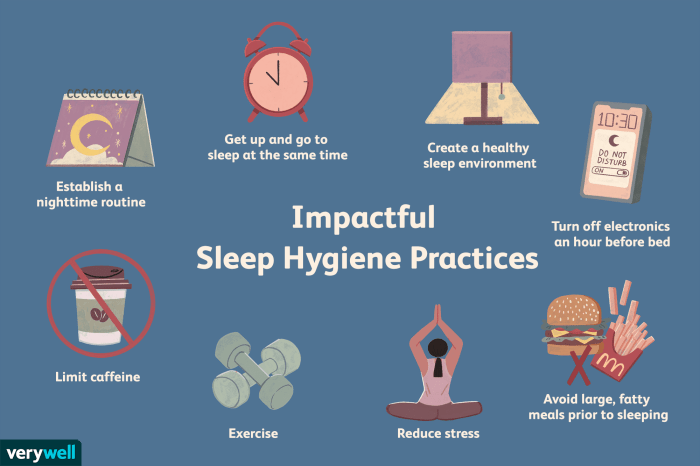
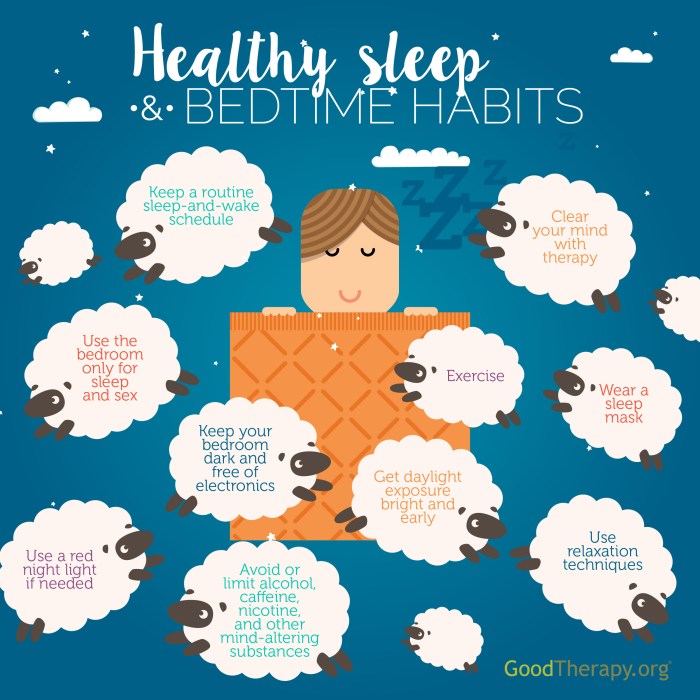
Implementing good sleep hygiene practices can significantly improve mental well-being. Establishing a regular sleep schedule, creating a relaxing bedtime routine, optimizing the sleep environment for darkness and quiet, and avoiding caffeine and alcohol before bed are crucial steps. Regular physical activity, a balanced diet, and stress-management techniques also play a vital role in improving sleep quality. By addressing sleep problems, individuals can experience reduced anxiety, improved mood, enhanced cognitive function, and increased resilience to stress.
This positive feedback loop contributes to a more stable and improved mental state.
Visual Representation of the Interconnectedness of Sleep and Mental Health, Sleep hygiene for mental health
Imagine a two-sided coin. On one side, represent the brain with intricate neural pathways actively engaged in various cognitive and emotional processes. These pathways are vibrant and well-defined when the brain is well-rested. On the other side, depict a tranquil moon and stars representing restorative sleep. Connect the two sides with a bidirectional arrow, signifying the constant interplay between sleep and brain function.
When the sleep side (moon and stars) is bright and full, the brain side is vibrant and healthy, indicating good mental well-being. When the sleep side is dark and fragmented, the brain side becomes dull and disjointed, illustrating the negative impact of poor sleep on mental health. The arrow emphasizes that the condition of one side directly influences the other, creating a continuous cycle of influence.
Workplace Mental Health and Sleep
The modern workplace, often characterized by demanding workloads, long hours, and intense pressure, significantly impacts employee well-being, profoundly affecting sleep quality and mental health. A strong correlation exists between workplace stress and sleep disturbances, creating a vicious cycle where poor sleep exacerbates stress, leading to reduced productivity and increased risk of burnout. Understanding this connection is crucial for fostering a healthier and more productive work environment.Workplace stress and burnout frequently manifest as sleep problems, including insomnia, difficulty falling asleep, frequent awakenings, and unrefreshing sleep.
These sleep disturbances, in turn, contribute to increased anxiety, irritability, difficulty concentrating, and decreased emotional regulation, all of which negatively impact job performance and overall mental health. The resulting fatigue and reduced cognitive function can lead to errors, accidents, and decreased productivity, impacting both the individual and the organization.
Strategies for Promoting Healthy Sleep Habits in the Workplace
Implementing strategies to promote healthy sleep habits within the workplace is a proactive step towards improving employee well-being and productivity. These initiatives should focus on educating employees about sleep hygiene and providing opportunities for rest and relaxation during the workday. A multifaceted approach is most effective.
Employer Support for Employee Mental Health and Well-being
Employer support is paramount in creating a workplace culture that prioritizes employee mental health and well-being, including sufficient sleep. This support manifests in various ways, from providing resources and training to creating a supportive and understanding work environment. A culture of open communication, where employees feel comfortable discussing mental health concerns without fear of judgment or reprisal, is essential.
Furthermore, employers must actively promote work-life balance, reasonable workloads, and flexible work arrangements where appropriate.
Examples of Workplace Initiatives Prioritizing Employee Mental Health and Sleep
Many organizations are actively implementing initiatives to support employee mental health and promote healthy sleep habits. These include offering employee assistance programs (EAPs) providing access to mental health professionals and resources. Some companies offer wellness programs that include sleep education workshops, stress management techniques, and mindfulness training. Others implement policies that encourage breaks throughout the workday, promote flexible work schedules, and limit after-hours emails and calls.
Companies that provide quiet rooms or designated spaces for relaxation and rest contribute to a supportive environment. For instance, Google is known for its emphasis on employee well-being, offering various programs including on-site gyms, mindfulness sessions, and generous vacation time. Similarly, some tech companies offer “nap pods” for employees to take short rests during the workday. These initiatives demonstrate a commitment to employee well-being and contribute to a more productive and engaged workforce.
Overcoming Addictions and Their Impact on Sleep
Substance abuse and addiction significantly disrupt sleep patterns, leading to a vicious cycle that negatively impacts both physical and mental health. The consequences extend beyond simple sleeplessness; they contribute to a range of mental health challenges and hinder recovery efforts. Understanding this complex interplay is crucial for effective treatment and long-term well-being.The impact of substance abuse on sleep is multifaceted.
Stimulants like cocaine and methamphetamine interfere with the natural sleep-wake cycle, causing insomnia and restlessness. Conversely, depressants such as alcohol and opioids initially induce drowsiness but disrupt the deeper stages of sleep, resulting in poor quality rest and daytime fatigue. This fragmented sleep pattern, combined with the inherent neurochemical changes caused by addiction, often exacerbates existing mental health conditions like anxiety and depression, or even triggers the onset of new ones.
Furthermore, withdrawal symptoms from various substances can significantly worsen sleep disturbances, leading to intense insomnia, nightmares, and increased anxiety. This further underscores the critical link between addiction, sleep, and mental health.
The Importance of Professional Help for Addiction and Co-occurring Mental Health Disorders
Seeking professional help is paramount for individuals struggling with addiction, particularly when co-occurring mental health disorders are present. Addiction treatment often requires a multidisciplinary approach, involving medical professionals, therapists, and support groups. This holistic approach addresses both the physical dependence on the substance and the underlying mental health issues that may be contributing to or resulting from the addiction.
Ignoring co-occurring disorders often leads to relapse and prevents full recovery. A comprehensive assessment allows for the development of a personalized treatment plan that targets both the addiction and the mental health concerns, significantly increasing the chances of successful recovery. This integrated approach recognizes that mental health and addiction are often intertwined, and treating one without addressing the other is rarely effective.
The Role of Sleep Hygiene in Addiction Recovery
Sleep hygiene plays a vital role in the recovery process from addiction. Establishing healthy sleep habits can help mitigate the sleep disturbances caused by substance abuse and withdrawal. This includes maintaining a regular sleep schedule, creating a relaxing bedtime routine, ensuring a comfortable sleep environment, and avoiding caffeine and alcohol before bed. Prioritizing sleep during recovery is not merely about improving rest; it contributes to overall physical and mental well-being, enhancing cognitive function, emotional regulation, and the ability to participate effectively in therapy and support groups.
Adequate sleep strengthens the body’s ability to heal and reduces the likelihood of relapse by improving mood and reducing stress, two significant relapse triggers.
Resources and Support Networks for Individuals Struggling with Addiction
Numerous resources and support networks are available for individuals struggling with addiction. These include:
- National Institute on Drug Abuse (NIDA): Provides comprehensive information on drug abuse and addiction, including treatment options and resources.
- Substance Abuse and Mental Health Services Administration (SAMHSA): Offers a national helpline (1-800-662-HELP) and online resources for individuals and families affected by substance abuse and mental health disorders.
- Alcoholics Anonymous (AA) and Narcotics Anonymous (NA): Peer support groups that provide a safe and supportive environment for individuals recovering from addiction.
- Local treatment centers and hospitals: Offer various levels of care, from detoxification to ongoing therapy and support.
These resources provide crucial support throughout the recovery journey, offering guidance, treatment options, and a sense of community. It is vital to remember that recovery is a process, and seeking help is a sign of strength, not weakness.
Personal Growth and Self-Care Practices
Personal growth and self-care are not merely luxuries; they are fundamental pillars supporting both mental well-being and healthy sleep patterns. Investing in these areas cultivates resilience, reduces stress, and fosters a more positive and balanced lifestyle, directly impacting sleep quality and the ability to manage mental health challenges. A holistic approach, encompassing mindful self-reflection and proactive self-care strategies, is crucial for achieving sustainable improvements in both mental and physical health.Self-care practices, when consistently integrated into daily life, significantly enhance mental health and sleep quality.
Prioritizing these activities demonstrates a commitment to well-being, creating a ripple effect that positively impacts various aspects of life, including sleep. Engaging in self-care is not selfish; it’s an act of self-preservation, equipping individuals with the tools necessary to navigate life’s stressors effectively and maintain a healthier balance.
Prioritizing Self-Care Activities
Effective self-care involves a multifaceted approach. Regular exercise, a balanced diet, and meaningful social connections are key components of a comprehensive self-care strategy. Exercise releases endorphins, natural mood boosters that combat stress and improve sleep. A balanced diet provides the necessary nutrients for optimal brain function and energy levels, supporting both mental clarity and restful sleep. Maintaining strong social connections offers emotional support and reduces feelings of isolation, contributing to improved mental health and reducing sleep disturbances.
For example, a consistent 30-minute walk most days of the week, incorporating plenty of fruits and vegetables into daily meals, and scheduling regular phone calls or in-person meetings with friends and family can significantly improve well-being.
Self-Reflection Exercises for Self-Awareness and Emotional Regulation
Self-reflection is a powerful tool for understanding one’s emotions, thoughts, and behaviors. Regularly engaging in self-reflection exercises can enhance self-awareness and improve emotional regulation, contributing to better mental health and sleep. Techniques such as journaling, mindfulness meditation, or simply taking time for quiet contemplation can facilitate this process. For instance, dedicating 15 minutes each evening to journaling about the day’s events and emotions can provide valuable insights into personal triggers and coping mechanisms.
Similarly, practicing mindfulness meditation for even a few minutes daily can cultivate a greater sense of present moment awareness and emotional stability.
Creating a Personalized Self-Care Plan
Developing a personalized self-care plan requires careful consideration of individual needs and preferences. This plan should incorporate healthy sleep habits, such as establishing a consistent sleep schedule, creating a relaxing bedtime routine, and optimizing the sleep environment. Stress management techniques, including deep breathing exercises, progressive muscle relaxation, or yoga, should also be integrated into the plan. For example, a personalized plan might include a 30-minute evening yoga session followed by 15 minutes of journaling, ensuring a consistent sleep schedule of 7-8 hours nightly, and maintaining a calm and dark bedroom environment.
This plan should be regularly reviewed and adjusted as needed to ensure it remains relevant and effective. Remember, consistency is key; even small, consistent efforts contribute to significant long-term benefits.
Prioritizing sleep hygiene is not merely about getting enough sleep; it’s about cultivating a holistic approach to mental well-being. By understanding the intricate interplay between sleep and mental health, and by implementing the strategies Artikeld here—from establishing consistent sleep schedules and optimizing sleep environments to managing stress and seeking professional support when needed—individuals can significantly improve their mental health and overall quality of life.
Taking proactive steps towards better sleep is an investment in a healthier, happier future.
FAQ Explained: Sleep Hygiene For Mental Health
What are some common sleep hygiene mistakes?
Common mistakes include inconsistent sleep schedules, using electronic devices before bed, consuming caffeine or alcohol close to bedtime, and an unsupportive sleep environment (e.g., too much light or noise).
How long does it take to establish a consistent sleep schedule?
It typically takes several weeks to fully adjust to a new sleep schedule. Consistency is key; stick with your chosen bedtime and wake-up time even on weekends.
Is it okay to take naps during the day?
Short naps (20-30 minutes) can be beneficial, but longer naps can disrupt nighttime sleep. Avoid napping late in the afternoon.
When should I seek professional help for sleep problems?
Seek professional help if sleep problems persist despite trying self-help strategies, significantly impact your daily life, or are accompanied by other mental health concerns.