How to Talk About Mental Health at Work
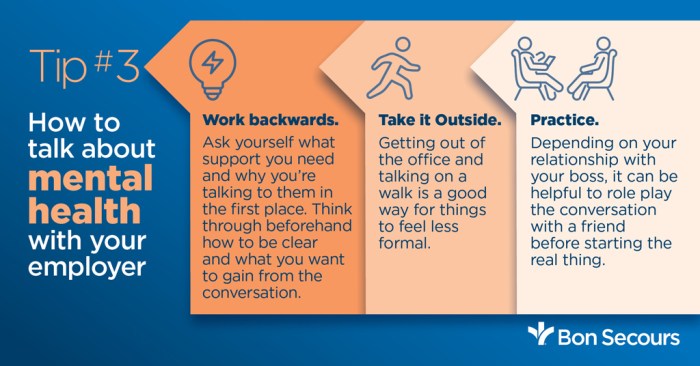
How to talk about mental health at work is a crucial skill in today’s workplace. Openly discussing mental well-being isn’t just beneficial for individual employees; it fosters a healthier, more productive, and supportive work environment for everyone. This guide explores practical strategies for initiating conversations, addressing concerns, and promoting a culture of understanding and support around mental health within your workplace.
We’ll cover a range of topics, from identifying signs of mental health struggles in colleagues to utilizing effective communication techniques with supervisors and HR. We will also delve into practical stress management techniques, mindfulness practices, and available resources for support, both internal and external. Ultimately, the goal is to empower you to create and contribute to a workplace where mental health is prioritized and openly discussed.
Initiating Conversations About Mental Health at Work
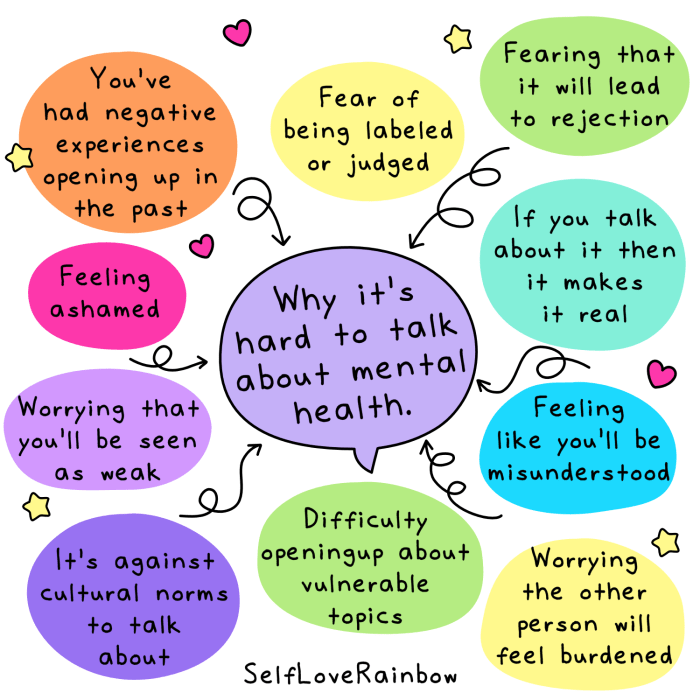
Openly discussing mental well-being is crucial for fostering a healthy and productive work environment. A supportive atmosphere where employees feel comfortable sharing their struggles reduces stigma and encourages help-seeking behavior, ultimately leading to improved employee morale and overall workplace well-being. This, in turn, can positively impact productivity and reduce absenteeism.Normalizing conversations about mental health requires a proactive and empathetic approach.
It’s about creating a culture where mental health is viewed with the same importance as physical health.
Casual and Professional Approaches to Initiating Conversations
Initiating a conversation about mental health requires sensitivity and awareness. Approaches should be tailored to the relationship you have with your colleague. A casual approach might be appropriate with close colleagues, while a more formal approach is necessary with supervisors or those you don’t know well.
- Casual Approach: “Hey [colleague’s name], I’ve noticed you seem a bit stressed lately. Is everything alright? I’m here if you need to chat.” Or, “I’ve been feeling a bit overwhelmed recently, and I wanted to share that. It’s been helpful to talk about it, and I wanted to check in with you to see how you’re doing.”
- Professional Approach: “I’ve been thinking about our team’s workload and wanted to check in. I’ve found it helpful to prioritize self-care and wanted to share resources available to support our well-being if needed.” Or, “I’m concerned about the overall team’s morale. Are there any support systems in place that we could utilize to help us manage stress effectively?”
Creating a Safe and Supportive Environment
Building trust and fostering a culture of openness are key to creating a safe space for mental health discussions. This involves demonstrating empathy, active listening, and respecting boundaries. Avoid offering unsolicited advice or minimizing someone’s experiences. Instead, focus on validation and offering support.
- Empathy and Active Listening: Show genuine concern and actively listen to your colleague’s concerns without judgment. Use non-verbal cues like nodding and maintaining eye contact to show you’re engaged.
- Respecting Boundaries: Recognize that not everyone will feel comfortable sharing their struggles. Respect their decision if they choose not to disclose personal information. Simply acknowledging their feelings and offering support can make a significant difference.
- Confidentiality: If someone shares sensitive information, assure them you will maintain confidentiality to the best of your ability. Explain any limitations, such as mandatory reporting requirements for serious concerns like self-harm.
Approaching a Supervisor or HR Representative About Mental Health Concerns
When approaching a supervisor or HR representative, it’s helpful to have a concise and clear plan. Focus on your concerns and what support you need, rather than overwhelming them with details.
Example Script: “Hi [Supervisor/HR Name], I’m reaching out to discuss my mental well-being. I’ve been experiencing [briefly describe your concerns, e.g., increased anxiety, difficulty concentrating]. I’m wondering if there are any resources or support systems available through the company that could help me manage this. I’m committed to my work, and I believe addressing this will improve my productivity and well-being.”
Addressing Mental Health Concerns in the Workplace: How To Talk About Mental Health At Work
Creating a supportive and understanding work environment is crucial for employee well-being and productivity. Addressing mental health concerns proactively not only benefits individual employees but also contributes to a healthier and more productive workplace overall. Ignoring these concerns can lead to significant negative consequences for both the individual and the organization.
Common Workplace Stressors, How to talk about mental health at work
Workplace stressors significantly impact mental health. These stressors can range from manageable challenges to overwhelming pressures, depending on individual coping mechanisms and the support systems available. Common sources include excessive workload, long working hours, lack of work-life balance, bullying and harassment, job insecurity, and lack of recognition or appreciation. Furthermore, unclear expectations, insufficient training, and a toxic work environment can all contribute to increased stress levels and negatively affect mental well-being.
The cumulative effect of these stressors can manifest in various mental health challenges, highlighting the need for proactive interventions.
Consequences of Ignoring Mental Health Issues
Ignoring mental health issues at work has far-reaching consequences. Reduced productivity and absenteeism are common outcomes as employees struggle to cope with their mental health challenges. Increased staff turnover, due to employees seeking healthier work environments, places a significant burden on the organization in terms of recruitment and training costs. Furthermore, a culture of silence around mental health can lead to decreased morale and engagement, impacting overall team performance and potentially creating a more toxic work environment.
Finally, ignoring mental health concerns can also lead to legal ramifications if the organization fails to provide reasonable accommodations or fails to address instances of harassment or bullying that contribute to mental health issues.
Identifying Colleagues Who May Be Struggling
Recognizing the signs of mental health struggles in colleagues requires attentiveness and understanding. Changes in behavior, such as increased irritability, withdrawal from social interactions, decreased productivity, or frequent absences, can be indicators. Changes in work performance, including missed deadlines, increased errors, or difficulty concentrating, may also suggest underlying mental health challenges. Physical symptoms, such as fatigue, headaches, or digestive problems, can also be linked to stress and mental health issues.
It is crucial to remember that these are potential indicators and should not be used to make diagnoses, but rather as prompts to offer support and encourage help-seeking behaviors.
Offering Support to a Struggling Colleague
Offering support to a struggling colleague requires sensitivity and a thoughtful approach. Here’s a step-by-step guide:
- Initiate a private and comfortable conversation: Choose a time and place where you can talk privately and without interruptions. Express your concern in a caring and non-judgmental manner.
- Listen actively and empathetically: Allow your colleague to share their experiences without interruption. Focus on listening and understanding their perspective, rather than offering immediate solutions.
- Validate their feelings: Acknowledge the challenges they are facing and validate their feelings. Let them know that it’s okay to not be okay.
- Offer practical support: Offer practical assistance, such as helping with tasks or offering to cover some of their responsibilities. This can ease their workload and reduce stress.
- Encourage professional help: Gently encourage your colleague to seek professional help from a therapist, counselor, or doctor. Provide information about available resources, such as employee assistance programs (EAPs) or mental health helplines.
- Maintain confidentiality: Respect their privacy and maintain confidentiality unless there is a clear and present danger to themselves or others.
- Follow up: Check in with your colleague periodically to see how they are doing. Let them know you’re there for them, without being intrusive.
Stress and Anxiety Management Techniques
Maintaining a healthy work-life balance is crucial for preventing burnout and promoting overall well-being. Effective stress and anxiety management strategies are essential for navigating the pressures of the modern workplace and ensuring both productivity and mental health. Implementing these techniques can lead to a more positive and productive work experience.
Coping Mechanisms for Workplace Stress and Anxiety
Several effective coping mechanisms can help manage stress and anxiety in a workplace setting. These techniques focus on addressing the root causes of stress, building resilience, and developing healthy responses to challenging situations. Deep breathing exercises, for example, can quickly calm the nervous system during stressful moments. Regular physical activity, even a short walk during a break, releases endorphins and reduces stress hormones.
Practicing progressive muscle relaxation, systematically tensing and releasing different muscle groups, can alleviate physical tension associated with anxiety. Additionally, maintaining a healthy diet and getting sufficient sleep significantly impacts stress levels and overall mental well-being. Finally, engaging in hobbies and activities outside of work provides a valuable outlet for stress and promotes mental rejuvenation.
Mindfulness Exercises for Work Breaks
Incorporating short mindfulness exercises during work breaks can significantly reduce stress and improve focus. A simple mindfulness exercise involves finding a quiet space, closing your eyes, and focusing on your breath. Notice the sensation of the air entering and leaving your body. If your mind wanders, gently guide your attention back to your breath. Another effective technique is body scan meditation, where you systematically bring your attention to different parts of your body, noticing any sensations without judgment.
Even a few minutes of mindful breathing or a body scan can significantly reduce stress and promote a sense of calm. A guided meditation app can also be a helpful tool.
Managing Workload and Prioritizing Tasks
Effective workload management is crucial for preventing stress. Prioritizing tasks using methods like the Eisenhower Matrix (urgent/important) can help focus on high-impact activities and delegate or eliminate less crucial tasks. Breaking down large projects into smaller, manageable steps can make them less overwhelming. Time blocking, scheduling specific time slots for particular tasks, can improve focus and productivity.
Regularly reviewing your to-do list and adjusting priorities as needed ensures you’re focusing your energy effectively. Learning to say “no” to additional tasks when your workload is already full is also an essential skill in managing stress.
Resources for Stress and Anxiety Management
Several resources are available to assist with stress and anxiety management. Many apps, such as Calm and Headspace, offer guided meditations and mindfulness exercises. Websites like the American Psychological Association (APA) and the National Institute of Mental Health (NIMH) provide valuable information and resources on stress management and mental health. Employee assistance programs (EAPs) offered by many employers provide confidential counseling and support services.
Local mental health clinics and therapists also offer professional guidance and support for individuals struggling with stress and anxiety. It’s important to explore the resources available and find what works best for your individual needs.
Creating a workplace where mental health is openly discussed and supported requires a collective effort. By implementing the strategies Artikeld in this guide, individuals can play a significant role in fostering a culture of understanding and empathy. Remember, open communication, empathy, and access to resources are key components in building a mentally healthy and productive work environment. Prioritizing mental health isn’t just beneficial for employees; it ultimately contributes to a more successful and thriving organization.
General Inquiries
What if my colleague doesn’t want to talk about their mental health?
Respect their boundaries. Simply let them know you’re there for them if they need support and offer specific resources if appropriate. Don’t pressure them.
How do I address mental health concerns without overstepping?
Focus on observable behaviors and express your concern with genuine care. For example, “I’ve noticed you seem stressed lately. Is there anything I can do to help?”
What if my employer doesn’t have mental health resources?
Advocate for change. Start by researching resources and presenting them to HR or management, highlighting the benefits of implementing mental health initiatives.
What if I’m struggling with my own mental health at work?
Prioritize self-care, utilize available resources (EAP, etc.), and consider seeking professional help. Don’t hesitate to communicate your needs to your supervisor, if appropriate and comfortable.


