Personal Growth Books Recommendations
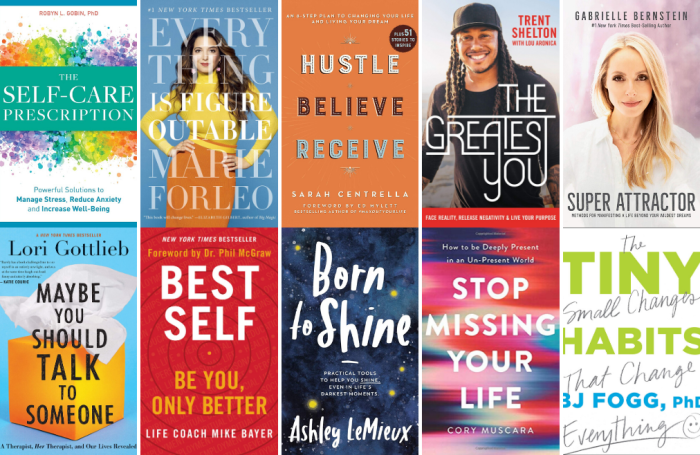
Personal Growth Books Recommendations: Embark on a journey of self-discovery and improvement through the power of reading. This exploration delves into a curated selection of books designed to enhance various aspects of your life, from boosting self-esteem and mastering communication to managing stress and cultivating mindfulness. We’ll examine diverse approaches to personal growth, offering insights and practical strategies to help you achieve your full potential.
This guide provides a comprehensive overview of personal growth literature, categorizing books by their focus areas and highlighting key takeaways. We’ll compare different methodologies, discuss practical exercises, and emphasize the importance of seeking professional help when needed. Ultimately, our aim is to empower you with the knowledge and resources to navigate your personal growth journey effectively.
Introduction to Personal Growth Books
Reading personal growth books offers a powerful pathway to self-improvement and a more fulfilling life. These books provide tools, strategies, and insights to help individuals navigate challenges, achieve their goals, and cultivate a greater sense of well-being. The benefits extend beyond simply acquiring knowledge; they involve actively applying the principles learned to transform thoughts, behaviors, and ultimately, one’s life trajectory.Personal growth literature encompasses a diverse range of topics and approaches, catering to a wide spectrum of individual needs and interests.
The sheer variety available can sometimes feel overwhelming, but understanding the common categories can help readers focus their search.
Categories of Personal Growth Books
Personal growth books can be broadly categorized, although many titles often blend elements from multiple categories. These categories provide a useful framework for exploring the vast landscape of self-improvement literature. Key categories include:
- Self-Esteem and Confidence Building: These books focus on developing a positive self-image, overcoming self-doubt, and building unshakeable confidence. They often employ techniques from cognitive behavioral therapy (CBT) and positive psychology.
- Goal Setting and Achievement: This category provides practical strategies and frameworks for defining, planning, and achieving personal and professional goals. Time management, productivity techniques, and overcoming procrastination are common themes.
- Emotional Intelligence and Mindfulness: Books in this area explore the development of emotional awareness, self-regulation, and empathy. Mindfulness practices and techniques for managing stress and anxiety are often included.
- Habit Formation and Change: These books offer guidance on breaking bad habits and cultivating positive ones. They often incorporate principles of behavioral science and provide step-by-step methods for lasting change.
- Relationships and Communication: This category focuses on improving interpersonal relationships, communication skills, and conflict resolution. It may include topics such as assertiveness training, active listening, and building healthy boundaries.
Comparison of Popular Personal Growth Books
The following table compares three influential personal growth books across key aspects:
| Aspect | “7 Habits of Highly Effective People” by Stephen Covey | “Mindset: The New Psychology of Success” by Carol S. Dweck | “Daring Greatly: How the Courage to Be Vulnerable Transforms the Way We Live, Love, Parent, and Lead” by Brené Brown |
|---|---|---|---|
| Author | Stephen Covey | Carol S. Dweck | Brené Brown |
| Target Audience | Broad audience seeking personal and professional effectiveness | Individuals seeking to understand and improve their mindset | Individuals seeking to understand and embrace vulnerability |
| Key Themes | Principle-centered living, effectiveness, proactivity, interdependence | Growth mindset vs. fixed mindset, the power of believing in one’s ability to learn and grow | Vulnerability, courage, shame resilience, wholehearted living |
Stress and Anxiety Management Resources in Books: Personal Growth Books Recommendations
Many books offer practical techniques for managing stress and anxiety, providing readers with tools to navigate challenging emotions and improve their overall well-being. These resources often blend psychological principles with actionable strategies, empowering individuals to take control of their mental health. The approaches vary, emphasizing different aspects of stress reduction, from mindfulness and cognitive restructuring to physical techniques and lifestyle changes.
Several books provide effective strategies for stress and anxiety reduction. For example, “Mindfulness for Beginners” by Jon Kabat-Zinn introduces mindfulness meditation as a core technique. “Feeling Good: The New Mood Therapy” by David Burns focuses on cognitive behavioral therapy (CBT) to challenge negative thought patterns. Comparing these approaches highlights the diverse avenues for managing stress; one emphasizes present moment awareness, while the other targets cognitive distortions.
Mindfulness Meditation Techniques
“Mindfulness for Beginners” details various mindfulness meditation techniques. One key exercise involves focusing on the breath, observing the sensation of each inhale and exhale without judgment. This anchors the practitioner in the present moment, reducing the tendency to dwell on anxieties about the future or regrets about the past. The book also suggests body scans, where attention is systematically directed to different parts of the body, noticing sensations without trying to change them.
This cultivates body awareness and helps to ground individuals experiencing anxiety. Another exercise involves mindful movement, such as mindful walking, focusing on the physical sensations of walking and the present moment experience rather than focusing on anxieties.
Cognitive Behavioral Therapy (CBT) Strategies
“Feeling Good: The New Mood Therapy” emphasizes identifying and challenging negative thought patterns. The book introduces the concept of cognitive restructuring, where individuals learn to identify and replace negative or distorted thoughts with more balanced and realistic ones. For example, if someone experiences the anxious thought “I’m going to fail this presentation,” CBT encourages them to challenge this thought by examining the evidence supporting and contradicting it.
The book also provides exercises to help readers identify cognitive distortions, such as catastrophizing (assuming the worst-case scenario) or all-or-nothing thinking. This process helps to break the cycle of negative thinking that often fuels anxiety. Another key aspect of CBT as presented in the book is behavioral activation, encouraging engagement in activities that bring pleasure and a sense of accomplishment.
Comparison of Mindfulness and CBT Approaches
While both mindfulness and CBT are effective stress management techniques, they approach the problem from different angles. Mindfulness focuses on cultivating present moment awareness and acceptance of thoughts and feelings without judgment. CBT, on the other hand, actively challenges and modifies negative thought patterns. Both approaches can be used independently or in conjunction with each other for comprehensive stress management.
The choice depends on individual preferences and needs. For instance, someone who struggles with racing thoughts might find CBT particularly helpful, while someone who tends to overthink might benefit from mindfulness practices.
Key Takeaways on Stress Management from Recommended Books
The following points summarize key takeaways regarding stress management from the discussed books and other reputable sources:
- Mindfulness meditation cultivates present moment awareness, reducing overthinking and anxiety.
- Cognitive restructuring helps to challenge and replace negative thought patterns with more realistic ones.
- Regular physical activity is crucial for stress reduction and overall well-being.
- Adequate sleep is essential for managing stress and improving mental clarity.
- Healthy eating habits support both physical and mental health.
- Establishing a supportive social network provides emotional resilience and reduces stress.
- Prioritizing self-care activities promotes relaxation and reduces stress levels.
Depression Support and Resilience Building
Many personal growth books offer valuable insights and practical strategies for managing depression and building resilience. Understanding these approaches can empower individuals to navigate challenging times and cultivate a stronger sense of self. This section will explore coping mechanisms, resilience-building techniques, and diverse perspectives on overcoming depression as presented in various self-help literature.Coping Mechanisms for Depression and Resilience-Building StrategiesSeveral personal growth books highlight effective coping mechanisms for depression, emphasizing the importance of proactive self-care and the development of inner strength.
These strategies often involve a multi-faceted approach, combining cognitive, behavioral, and emotional techniques.
Coping Mechanisms Described in Literature
Many books advocate for a holistic approach to managing depression, combining therapeutic techniques with lifestyle changes. For example, mindfulness practices, as detailed in books like “Mindfulness for Beginners” by Jon Kabat-Zinn, encourage focusing on the present moment to reduce rumination and anxiety, common symptoms of depression. Cognitive Behavioral Therapy (CBT) techniques, frequently discussed in self-help books on depression, focus on identifying and challenging negative thought patterns.
Regular exercise, healthy eating, and sufficient sleep are also consistently emphasized as crucial components of managing depressive symptoms. Furthermore, building strong social connections and seeking support from loved ones or a therapist are often highlighted as essential strategies.
Resilience-Building Strategies Presented in Personal Growth Books
Building resilience involves cultivating the capacity to bounce back from adversity. Personal growth literature frequently emphasizes the importance of developing a strong sense of self-compassion, accepting imperfections, and practicing self-forgiveness. Setting realistic goals, celebrating small victories, and learning from setbacks are also highlighted as crucial elements of resilience. Developing a growth mindset, as popularized by Carol Dweck’s “Mindset,” encourages viewing challenges as opportunities for learning and growth rather than insurmountable obstacles.
Cultivating a positive outlook and practicing gratitude are further strategies often recommended to enhance resilience and overall well-being. Finally, developing coping skills for stress and practicing self-care are integral to building emotional strength and resilience.
Different Approaches to Overcoming Depression
Different personal growth books offer varied approaches to overcoming depression, reflecting the diverse nature of the condition and individual experiences. Some books emphasize the importance of cognitive restructuring, helping individuals identify and modify negative thought patterns. Others focus on emotional regulation techniques, such as mindfulness or meditation, to manage overwhelming emotions. Certain books prioritize behavioral activation, encouraging individuals to engage in activities that bring pleasure or a sense of accomplishment.
A comprehensive approach often integrates several of these strategies, recognizing that a multifaceted approach is typically most effective.
Encouraging Quotes from Personal Growth Books
“The mind is everything. What you think you become.”
Buddha
This quote emphasizes the power of positive thinking and the importance of cultivating a mindset conducive to healing and growth.
“The only way out is through.”
Robert Frost
This quote, though not strictly from a self-help book, reflects the common sentiment in many personal growth books that facing challenges directly, rather than avoiding them, is crucial for overcoming adversity.
“You are not your thoughts; you are what you do.”
Stephen Covey
This emphasizes the importance of taking action, despite difficult thoughts and feelings, to improve one’s mental state.
Mindfulness and Mental Health Practices
Mindfulness, the practice of paying attention to the present moment without judgment, has gained significant traction as a tool for improving mental well-being. Numerous books explore its application, offering various techniques and highlighting its profound impact on stress reduction, anxiety management, and overall mental health. This section will delve into specific mindfulness exercises, benefits, and comparative approaches presented in popular personal growth literature.Mindfulness exercises described in these books often involve focusing on the breath, bodily sensations, or sounds.
These practices aim to cultivate awareness of the present moment, thereby interrupting negative thought patterns and reducing emotional reactivity. The benefits, as discussed in these texts, are multifaceted, extending beyond stress reduction to encompass improved focus, emotional regulation, and increased self-compassion.
Mindfulness Exercises from Recommended Books, Personal growth books recommendations
Many books advocate for various mindfulness exercises. For instance, “Wherever You Go, There You Are” by Jon Kabat-Zinn introduces a structured approach to mindfulness meditation, emphasizing the importance of cultivating present moment awareness through focused attention on the breath. Another example is “Full Catastrophe Living” by Jon Kabat-Zinn, which incorporates mindfulness meditation within a broader framework of stress reduction techniques, integrating mindful movement and body scans.
These exercises are presented as tools to cultivate a non-judgmental awareness of one’s thoughts, feelings, and bodily sensations.
Benefits of Mindfulness Practices
Books on mindfulness consistently emphasize the benefits of regular practice. Improved focus and concentration are frequently cited, as mindfulness cultivates the ability to direct attention effectively and resist distractions. Furthermore, studies referenced in these books often show a correlation between mindfulness and reduced stress and anxiety levels. By cultivating present moment awareness, individuals can interrupt the cycle of worry and rumination, promoting a sense of calm and emotional stability.
Increased self-awareness and emotional regulation are also highlighted, empowering individuals to better understand and manage their emotional responses. This leads to improved relationships and overall enhanced well-being.
Comparison of Mindfulness Meditation Approaches
“Mindfulness in Plain English” by Bhante Henepola Gunaratana emphasizes a more analytical approach to meditation, encouraging practitioners to observe their thoughts and sensations without getting carried away by them. This contrasts with the more experiential approach found in Jon Kabat-Zinn’s work, which focuses less on intellectual understanding and more on direct experience of the present moment. While both approaches aim to cultivate mindfulness, they differ in their emphasis on cognitive understanding versus direct sensory experience.
Gunaratana’s approach encourages a more detached observation of mental processes, whereas Kabat-Zinn’s emphasizes a more embodied and intuitive understanding of the present moment.
Step-by-Step Guide to a Mindfulness Technique (Based on “Wherever You Go, There You Are”)
This guide Artikels a simple mindfulness of breathing exercise as described in Jon Kabat-Zinn’s “Wherever You Go, There You Are”:
- Find a comfortable position, either sitting or lying down. Ensure your posture is upright but relaxed.
- Close your eyes gently. Bring your attention to your breath, noticing the sensation of the air entering and leaving your nostrils or the rise and fall of your abdomen.
- Focus solely on the sensation of your breath. Don’t try to control it; simply observe it. Notice the pauses between breaths, the temperature of the air, and any other subtle sensations.
- As your mind wanders—and it inevitably will—gently redirect your attention back to your breath. Don’t judge yourself for getting distracted; simply acknowledge the distraction and return to your breath.
- Continue this practice for 5-10 minutes. As you become more experienced, you can gradually increase the duration of your practice.
- When you’re ready, gently open your eyes and take a few moments to transition back to your surroundings.
This exercise, practiced regularly, can cultivate present moment awareness and reduce stress and anxiety. The key is consistency and non-judgmental observation.
Mental Health Advocacy and Seeking Professional Help
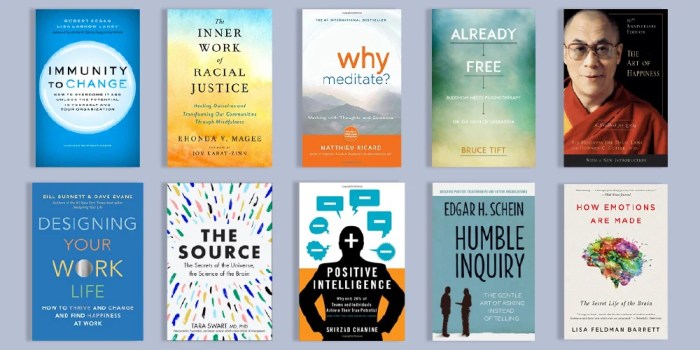
Many personal growth books emphasize the critical role of seeking professional help for mental health concerns. Ignoring mental health challenges can significantly hinder personal growth and overall well-being. These books often highlight the limitations of self-help alone and advocate for a collaborative approach involving professional guidance.Numerous personal growth resources discuss the benefits of professional intervention. They emphasize that just as we seek medical advice for physical ailments, mental health concerns require the expertise of trained professionals.
Books often detail the different types of mental health professionals available, such as therapists, counselors, psychiatrists, and psychologists, and the unique services they provide. This knowledge empowers readers to make informed decisions about the type of support they need.
Resources and Support Systems for Mental Health
Personal growth literature frequently highlights the importance of building a strong support network. This can include family, friends, support groups, and online communities. Many books provide practical advice on how to identify and cultivate these relationships. Furthermore, they often list resources such as helplines, online forums, and mental health organizations that offer additional support and information. Examples include the National Alliance on Mental Illness (NAMI) in the United States, or similar organizations in other countries, which offer resources, support groups, and educational materials.
Books also frequently suggest utilizing employee assistance programs (EAPs) if available through one’s workplace. These programs often provide confidential counseling and other resources to employees.
The Role of Self-Compassion and Self-Acceptance in Mental Health Journeys
Self-compassion and self-acceptance are frequently presented in personal growth books as crucial elements in navigating mental health challenges. These books emphasize that self-criticism and negative self-talk can exacerbate mental health issues. Instead, they encourage readers to cultivate kindness and understanding towards themselves, acknowledging that everyone experiences setbacks and imperfections. The concept of self-acceptance, embracing oneself fully with strengths and weaknesses, is presented as a pathway to greater resilience and emotional well-being.
Many books provide practical exercises and techniques for fostering self-compassion, such as mindfulness practices and self-affirmations. For example, a book might suggest practicing a daily self-compassion meditation, or journaling about positive personal qualities.
Warning Signs of Mental Health Issues
Understanding the warning signs of mental health issues is essential for early intervention and support. Personal growth books often provide lists of common symptoms, encouraging readers to pay attention to persistent changes in their emotional, behavioral, or physical well-being. These lists are not intended for self-diagnosis but rather to raise awareness and encourage seeking professional help if concerning symptoms persist.
- Persistent sadness or low mood
- Significant changes in sleep patterns (insomnia or excessive sleeping)
- Loss of interest or pleasure in activities previously enjoyed
- Changes in appetite or weight
- Feelings of worthlessness or excessive guilt
- Difficulty concentrating or making decisions
- Fatigue or low energy
- Restlessness or irritability
- Recurrent thoughts of death or suicide
- Significant changes in behavior or social withdrawal
Ultimately, the path to personal growth is a deeply individual one. While these recommended books offer valuable insights and practical tools, remember that self-discovery is a continuous process requiring self-reflection and, at times, professional guidance. By actively engaging with these resources and embracing the lessons they impart, you can embark on a transformative journey towards a more fulfilling and balanced life.
We encourage you to explore these suggestions and discover the books that resonate most with your personal needs and aspirations.
FAQ
What if I don’t have much time for reading?
Many personal growth books offer key concepts in concise chapters or through audiobooks, allowing for flexible reading schedules.
How do I choose the right book for my specific needs?
Consider your current challenges and goals. The book descriptions and categorizations in this guide can help you identify relevant titles.
Are these books suitable for all ages?
While many are broadly applicable, some books might be more appropriate for specific age groups. Check the book descriptions for target audience information.
Where can I find these books?
Most of these books are readily available online and at major bookstores.


