Progressive Muscle Relaxation for Anxiety
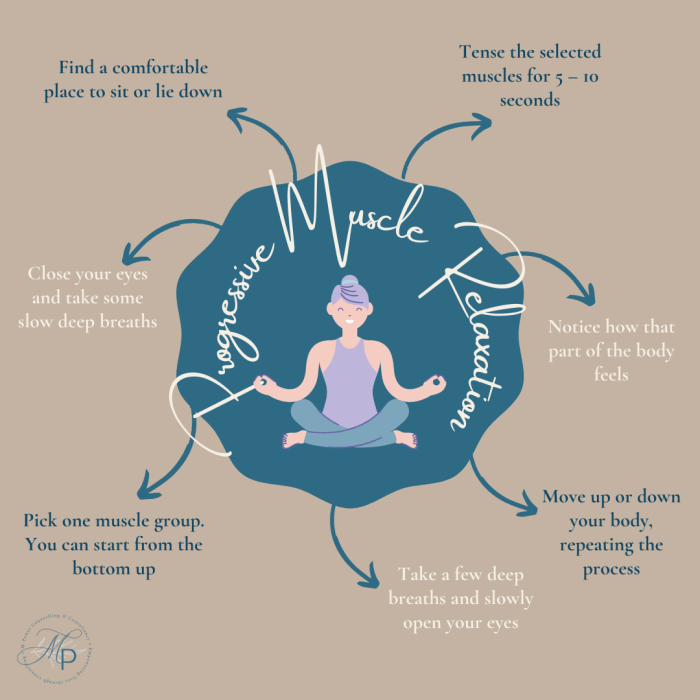
Progressive muscle relaxation for anxiety offers a powerful, scientifically-backed technique for managing stress and its related symptoms. This method, developed over decades, focuses on systematically tensing and releasing different muscle groups to achieve a state of deep relaxation. By understanding the connection between physical tension and mental anxiety, individuals can learn to alleviate both physical and emotional discomfort, leading to a greater sense of calm and control.
This approach contrasts with other relaxation techniques by directly addressing the somatic component of anxiety. Unlike deep breathing, which primarily targets respiratory regulation, or meditation, which focuses on mental focus, PMR tackles the physical tension often associated with anxiety. This targeted approach makes it a highly effective tool for those who experience significant physical manifestations of their anxiety, such as muscle aches, tension headaches, or digestive problems.
The technique’s simplicity and accessibility also make it a valuable tool for self-management, easily integrated into daily routines.
Introduction to Progressive Muscle Relaxation (PMR)
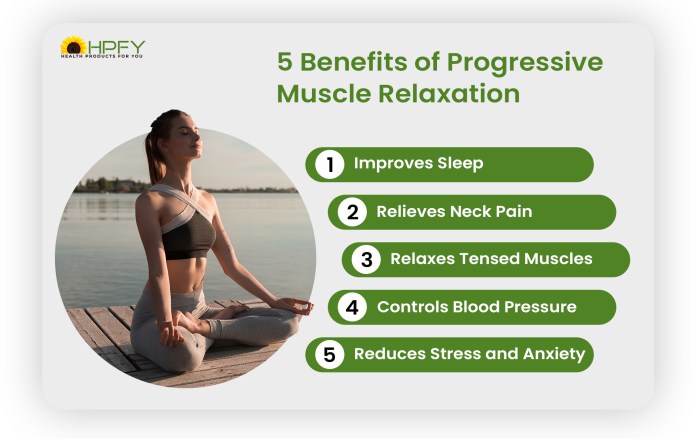
Progressive Muscle Relaxation (PMR) is a technique designed to relieve tension and anxiety by systematically tensing and releasing different muscle groups in the body. It’s based on the principle that physical tension and mental anxiety are closely linked, and by consciously releasing physical tension, we can also reduce mental stress. This technique is relatively easy to learn and can be practiced almost anywhere, making it a valuable tool for managing stress and anxiety in daily life.PMR’s effectiveness stems from its impact on the body’s physiological responses to stress.
When we experience anxiety, our bodies often react with increased muscle tension, a faster heart rate, and shallow breathing. PMR counteracts these effects. By consciously tensing and releasing muscles, we interrupt the cycle of tension and promote relaxation. The process also stimulates the parasympathetic nervous system, responsible for the body’s “rest and digest” response, which helps lower heart rate and blood pressure, and reduces the production of stress hormones like cortisol.
This physiological shift contributes significantly to the reduction of anxiety symptoms.
The History and Development of PMR
Progressive Muscle Relaxation was developed in the early 20th century by Edmund Jacobson, a physician who observed the relationship between muscle tension and psychological states. Jacobson’s initial work focused on identifying and treating psychosomatic illnesses, where psychological factors contribute to physical symptoms. He developed PMR as a method for patients to become aware of and control their muscle tension, ultimately leading to a reduction in both physical and psychological distress.
Over time, PMR has been refined and adapted, with various approaches and modifications emerging to suit different needs and preferences. Its enduring popularity is a testament to its effectiveness and accessibility.
Comparison of PMR with Other Relaxation Techniques
PMR differs from other relaxation techniques in its focus on systematically tensing and releasing specific muscle groups. Deep breathing exercises, while effective in reducing anxiety, primarily target the respiratory system and its connection to the nervous system. Meditation, on the other hand, emphasizes mental focus and awareness, often involving mindfulness of thoughts and sensations without direct physical manipulation.
While all three techniques can be beneficial for managing anxiety, PMR offers a unique approach by directly addressing the physical manifestation of stress through muscle tension. Its systematic nature can be particularly helpful for individuals who find it difficult to relax or who are struggling to identify the sources of their tension. The choice of which technique is best often depends on individual preferences and the specific needs of the person.
PMR Techniques and Procedures: Progressive Muscle Relaxation For Anxiety
Progressive Muscle Relaxation (PMR) is a straightforward yet powerful technique for managing anxiety and promoting relaxation. It involves systematically tensing and releasing different muscle groups in the body, creating a heightened awareness of physical sensations and ultimately leading to a state of deep relaxation. This process helps to break the cycle of tension associated with anxiety and stress.
Effective PMR involves a methodical approach, focusing on specific muscle groups and paying close attention to the sensations of tension and release. Consistency is key; regular practice enhances the effectiveness of the technique. Finding a quiet, comfortable space free from distractions is crucial for optimal results.
Step-by-Step Guide to PMR, Progressive muscle relaxation for anxiety
The following steps Artikel a typical PMR session. Remember to breathe deeply and evenly throughout the exercise. Focus on the sensations in your body, noticing the difference between tension and release.
- Find a comfortable position: Lie down on your back or sit in a comfortable chair with your feet flat on the floor. Ensure your spine is supported and your body is relaxed.
- Start with your dominant hand: Begin by clenching your fist tightly, noticing the tension building in your hand and forearm. Hold this tension for 5-7 seconds.
- Release the tension: Completely relax your hand and arm, letting go of all tension. Notice the feeling of relaxation spreading through your hand and arm. Hold this relaxed state for 20-30 seconds, focusing on the sensation of release.
- Progress through muscle groups: Systematically work your way through different muscle groups, following the sequence Artikeld in the table below. Remember to tense each group for 5-7 seconds and relax for 20-30 seconds.
- Repeat the process: Repeat the tension and release cycle for each muscle group at least once. You can repeat the entire sequence several times for a deeper relaxation experience.
- End the session: Once you have completed the sequence, take a few moments to simply lie or sit quietly, enjoying the feeling of relaxation. Gradually return to your normal activities.
Muscle Group Tension and Release Sequence
The table below provides a suggested sequence for a full-body PMR session. This sequence is a guideline; you can adjust it to suit your needs and preferences. The duration of tension and relaxation can also be adjusted based on your comfort level. Remember to focus on the sensations of tension and release in each muscle group.
| Muscle Group | Tension Duration (seconds) | Relaxation Duration (seconds) | Sensation Description |
|---|---|---|---|
| Right Hand | 5-7 | 20-30 | Tightness, pressure in hand and forearm; release feels like warmth and lightness. |
| Left Hand | 5-7 | 20-30 | Tightness, pressure in hand and forearm; release feels like warmth and lightness. |
| Right Forearm | 5-7 | 20-30 | Tightness, pressure in forearm; release feels like a melting away of tension. |
| Left Forearm | 5-7 | 20-30 | Tightness, pressure in forearm; release feels like a melting away of tension. |
| Biceps (both arms) | 5-7 | 20-30 | Tightness, pressure in upper arms; release feels like a softening and lengthening of muscles. |
| Shoulders (both) | 5-7 | 20-30 | Tightness, pressure, and potential stiffness; release feels like a dropping away of weight. |
| Face (forehead, eyes, jaw) | 5-7 | 20-30 | Tension in forehead, tightening around eyes, clenching of jaw; release feels like a smoothing and softening of facial features. |
| Neck | 5-7 | 20-30 | Stiffness, tightness; release feels like a lengthening and easing of tension. |
| Chest | 5-7 | 20-30 | Tightness, pressure in chest; release feels like a broadening and opening of the chest. |
| Back (upper and lower) | 5-7 | 20-30 | Tightness, stiffness; release feels like a melting away of tension and a straightening of the spine. |
| Abdomen | 5-7 | 20-30 | Tightness, pressure; release feels like a softening and relaxing of the abdominal muscles. |
| Right Thigh | 5-7 | 20-30 | Tightness, pressure; release feels like a lengthening and softening of the leg muscles. |
| Left Thigh | 5-7 | 20-30 | Tightness, pressure; release feels like a lengthening and softening of the leg muscles. |
| Right Calf | 5-7 | 20-30 | Tightness, pressure; release feels like a lengthening and softening of the leg muscles. |
| Left Calf | 5-7 | 20-30 | Tightness, pressure; release feels like a lengthening and softening of the leg muscles. |
| Right Foot | 5-7 | 20-30 | Tightness, pressure; release feels like a relaxing of the foot muscles. |
| Left Foot | 5-7 | 20-30 | Tightness, pressure; release feels like a relaxing of the foot muscles. |
Sample Audio Script for PMR
This script provides a guided PMR exercise focusing on the hands and forearms. Remember to adjust the pacing to suit your needs and to breathe deeply throughout.
“Find a comfortable position, either lying down or sitting. Close your eyes. Begin by focusing on your right hand. Make a tight fist, noticing the tension. Hold this tension for five seconds… Now, release the tension completely.
Feel the relaxation spreading through your hand and forearm. Hold this relaxed state for twenty-five seconds… Now, focus on your left hand. Make a tight fist… Hold for five seconds… Release… Feel the relaxation… Now, your right forearm… Tense… Hold for five seconds… Release… Relax… Left forearm… Tense… Hold for five seconds… Release… Relax… Take a few more deep breaths, enjoying the feeling of relaxation.
When you’re ready, gently open your eyes.”
PMR for Specific Anxiety Disorders
Progressive muscle relaxation (PMR) has shown promise as a complementary therapy for various anxiety disorders. Its effectiveness stems from its ability to interrupt the physiological cycle of anxiety, reducing muscle tension and promoting a state of relaxation that counteracts the heightened arousal associated with anxiety symptoms. This section explores PMR’s application in managing specific anxiety disorders.
PMR and Generalized Anxiety Disorder (GAD)
Research suggests that PMR is a beneficial tool in the management of Generalized Anxiety Disorder (GAD). Individuals with GAD experience persistent and excessive worry about various aspects of life, often accompanied by physical symptoms like muscle tension, fatigue, and sleep disturbances. PMR directly addresses the physical tension component, thereby reducing the overall experience of anxiety. Studies have shown that regular practice of PMR can lead to significant reductions in GAD symptom severity, improving sleep quality and reducing feelings of worry and restlessness.
For instance, a study published in the journalBehaviour Research and Therapy* demonstrated a statistically significant decrease in GAD symptoms among participants who underwent a structured PMR program compared to a control group. The improvement was sustained even after the program concluded, suggesting the long-term benefits of PMR for managing GAD.
PMR and Social Anxiety Disorder (SAD)
Social anxiety disorder, characterized by intense fear and anxiety in social situations, often manifests as physical symptoms like trembling, sweating, and rapid heartbeat. These symptoms are directly related to muscle tension. PMR can help individuals with SAD manage these physical manifestations of anxiety. By systematically relaxing specific muscle groups, PMR can reduce the physiological arousal that precedes and accompanies social anxiety.
This reduction in physical symptoms can then contribute to a decrease in the overall experience of anxiety and improve an individual’s ability to cope with social situations. While PMR alone may not completely eliminate social anxiety, it can be a valuable tool in reducing its intensity and improving an individual’s overall quality of life. A therapist might integrate PMR into a broader cognitive-behavioral therapy (CBT) approach to address both the physical and cognitive aspects of SAD.
PMR and Panic Attacks
Panic attacks are characterized by sudden episodes of intense fear accompanied by physical symptoms such as rapid heartbeat, shortness of breath, dizziness, and trembling. The physical symptoms are often exacerbated by heightened muscle tension. PMR can be a valuable technique for managing panic attacks by interrupting the physiological cycle of the attack. By focusing on relaxing specific muscle groups, individuals can actively counter the physical manifestations of panic.
While PMR may not prevent panic attacks entirely, it can lessen their intensity and duration, helping individuals regain a sense of control during an episode. For example, imagine someone experiencing a panic attack on a bus. By consciously practicing PMR, focusing on relaxing their jaw, shoulders, and hands, they might be able to reduce the intensity of their physical symptoms and the overwhelming feeling of fear.
This allows them to ride out the panic attack more effectively. It’s important to note that PMR is most effective when used proactively, regularly practicing the technique to build coping skills.
In conclusion, progressive muscle relaxation provides a readily accessible and effective method for managing anxiety. Its systematic approach, focusing on the mind-body connection, empowers individuals to actively participate in their own stress reduction. While PMR can be a standalone technique, its integration with other holistic approaches, such as CBT and mindfulness, further enhances its effectiveness. By understanding the physiological underpinnings of anxiety and employing this simple yet profound technique, individuals can cultivate a greater sense of calm, resilience, and overall well-being.
The journey to managing anxiety is personal, and PMR serves as a valuable tool in that journey.
Common Queries
How long does a PMR session typically last?
A full-body PMR session can range from 10 to 20 minutes, depending on the individual’s needs and preferences. Shorter, targeted sessions focusing on specific muscle groups are also possible.
Can PMR be used for children or the elderly?
Yes, PMR can be adapted for different age groups. Simplified versions can be used with children, focusing on fewer muscle groups and using age-appropriate language. For the elderly, adjustments may be needed to accommodate physical limitations.
Is PMR a replacement for therapy?
No, PMR is a complementary technique that can be highly beneficial when used alongside professional therapy. It addresses the physical symptoms of anxiety, while therapy addresses the underlying cognitive and emotional factors.
What if I struggle to relax my muscles completely?
It’s common to experience some difficulty initially. Practice and patience are key. Focusing on the sensation of release and using guided audio scripts can help improve your ability to relax your muscles more effectively.